Lindon Foundation Pros
Wall Stabilization in Lindon, UT
Wall stabilization in Lindon fixes bowing or cracking basement walls with anchors and carbon fiber straps. Free estimates available.
- 15+ Years local experience
- 500+ Projects completed
- Licensed & Insured
Serving Lindon and nearby communities.
A bowing or cracking basement wall usually means hydrostatic pressure from saturated soil is pushing harder than the wall can resist. Wall stabilization stops that movement with anchors, braces, or carbon fiber reinforcement matched to how far the wall has already moved.
Spring snowmelt along the Wasatch Front pushes extra water against older basement walls in Lindon every year, and homes with block or poured walls from earlier building eras tend to show the first signs of bowing after a few freeze-thaw cycles. Lindon Foundation Pros checks the wall, the soil pressure behind it, and the drainage situation before recommending a fix.
What's included
What's Included With Wall Stabilization
Typically included: wall inspection, pressure assessment, anchor or brace installation, tensioning adjustment, final stability check. Optional: exterior drainage correction if hydrostatic pressure is the root cause, epoxy crack sealing before reinforcement. Customer prep: clear a path to the affected basement wall and remove anything stored directly against it.
Want a clearer scope?
Get a Free EstimateHow it works
How Our Wall Stabilization Process Works
 Step 1
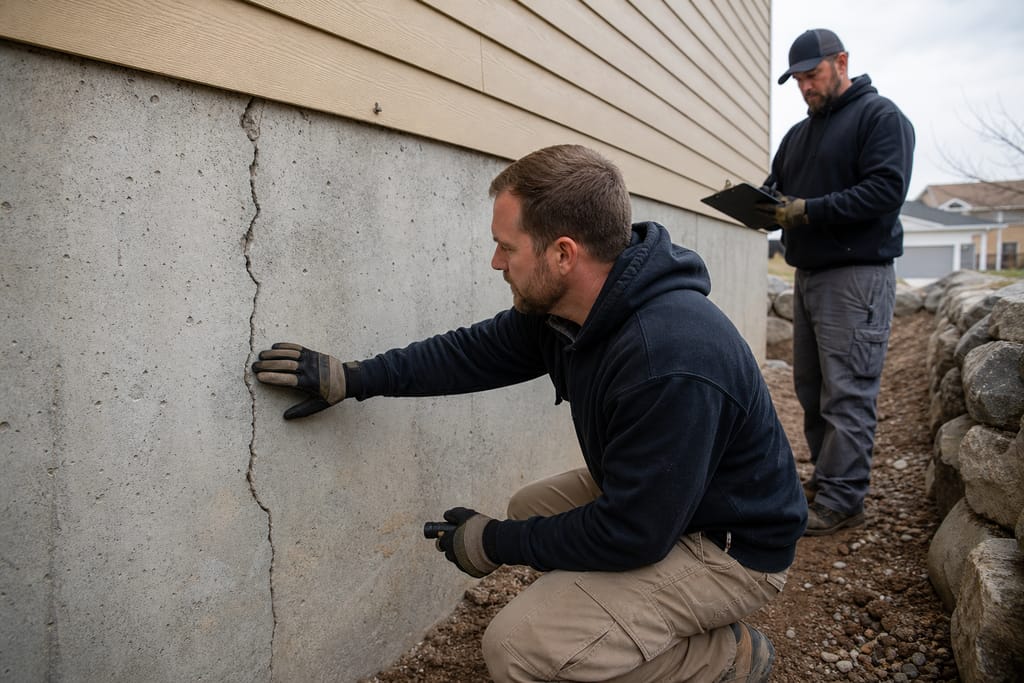
Wall Inspection
Walls are examined for bowing, cracking, or leaning indicators.
 Step 2
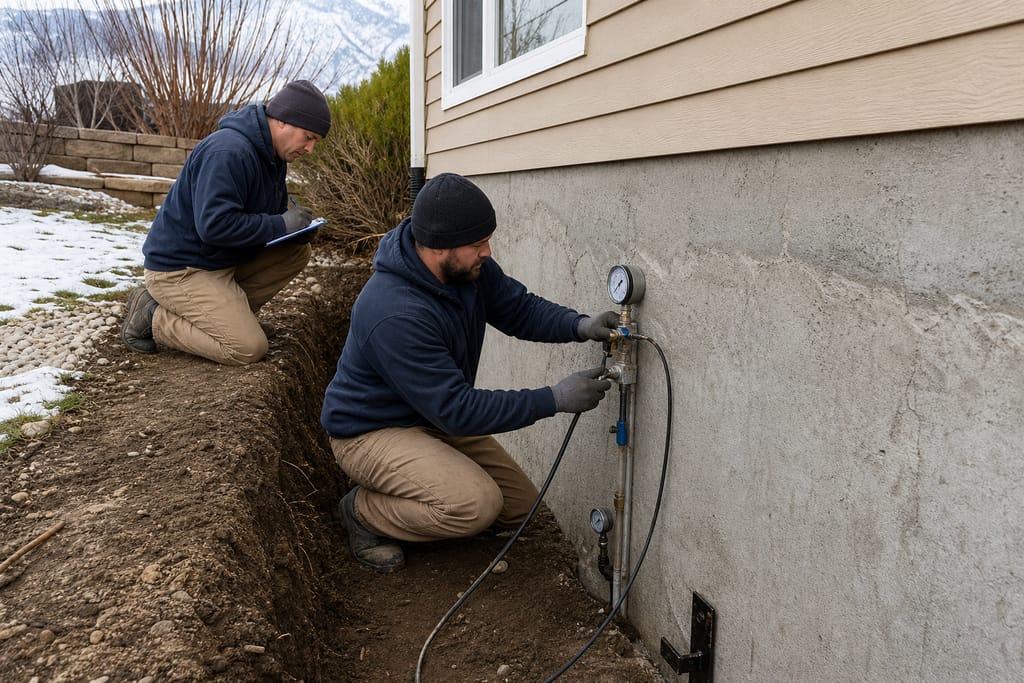
Pressure Assessment
Soil and hydrostatic pressure contributing to wall movement are evaluated.
 Step 3
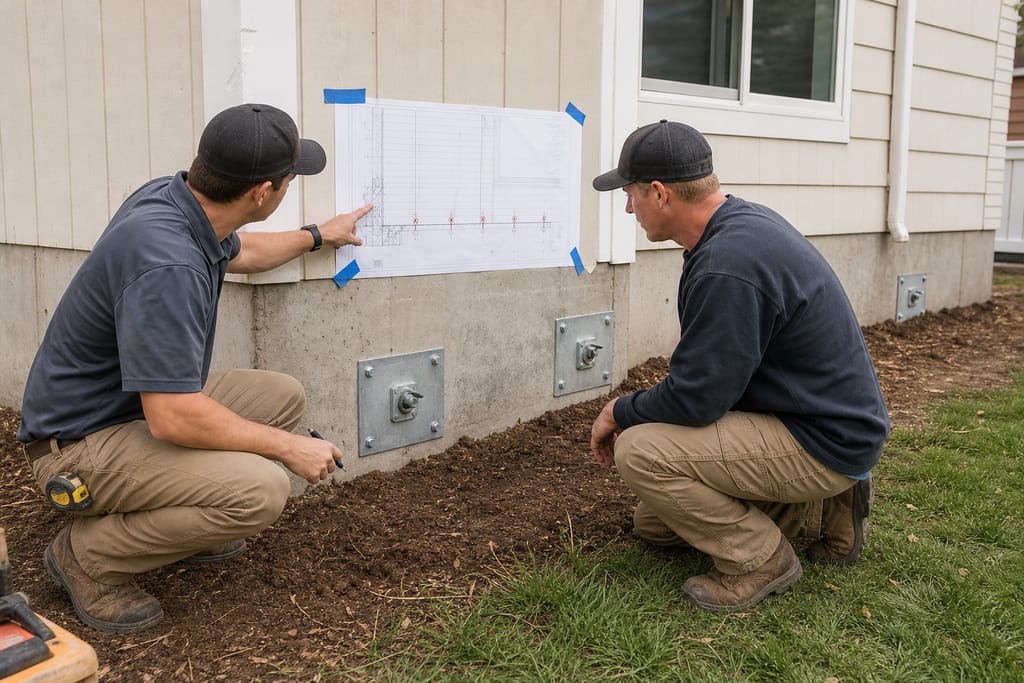
Reinforcement Planning
A stabilization method is selected based on wall condition and severity.
 Step 4
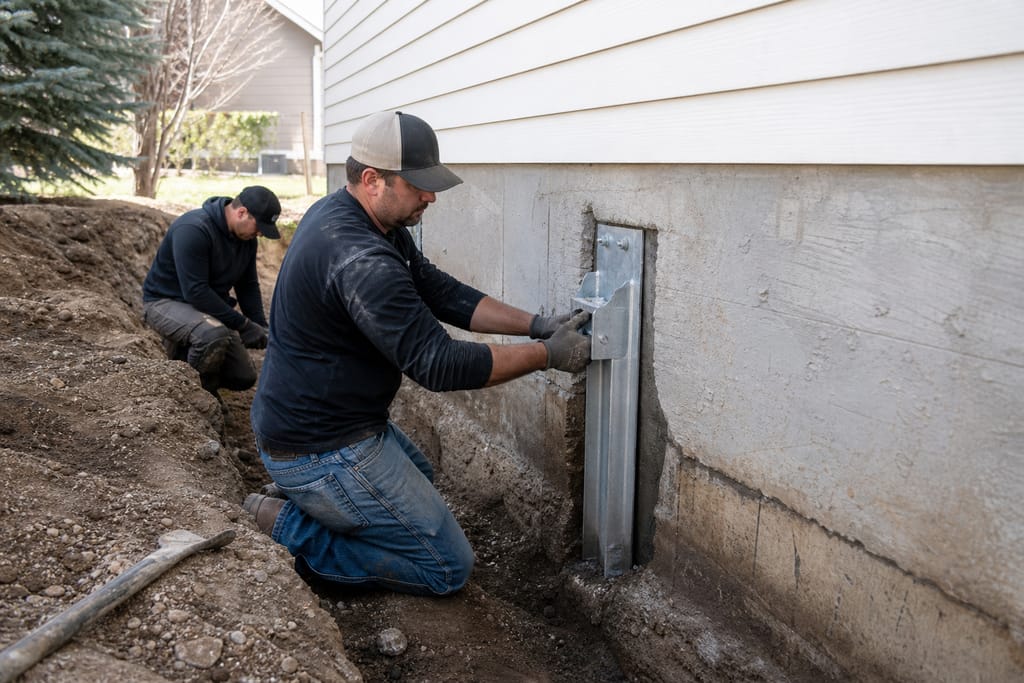
Anchor Or Brace Installation
Support systems are installed to halt further wall movement.
 Step 5
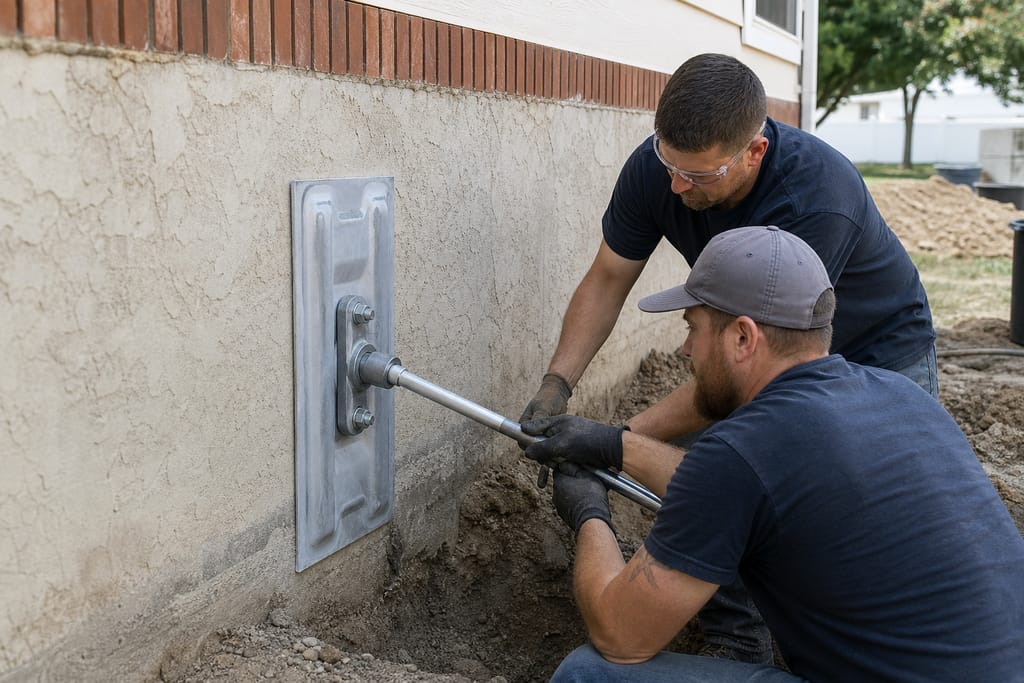
Tensioning Adjustment
Anchors or braces are tightened to gradually stabilize the wall.
 Step 6
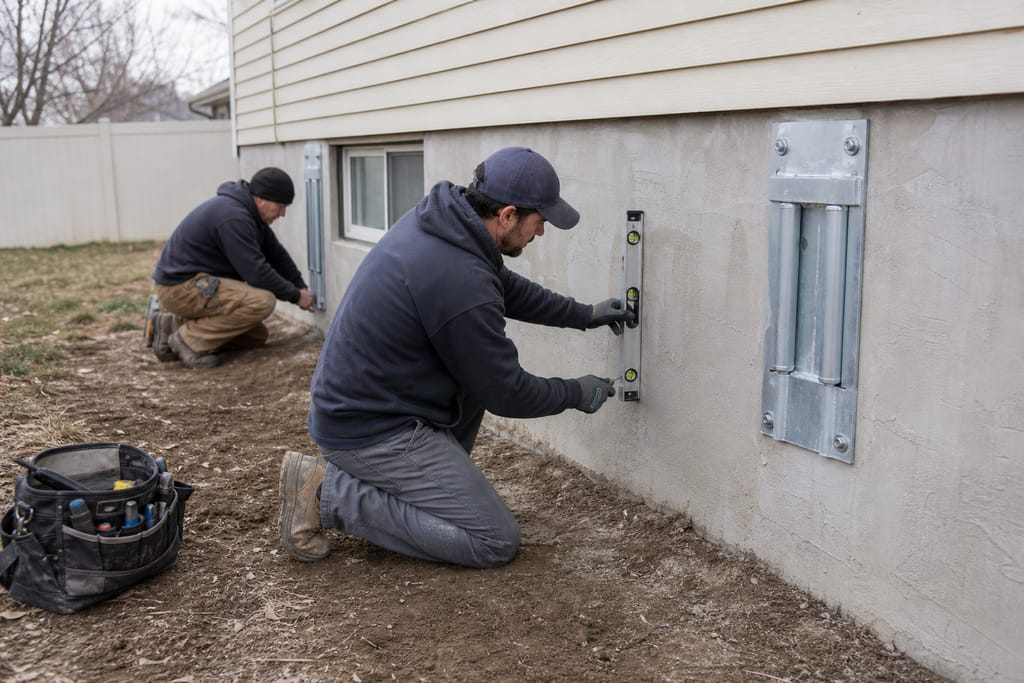
Final Inspection
The wall is rechecked to confirm stability and proper installation.
Materials
Materials and Methods for Wall Stabilization
Method choice comes down to how far the wall has bowed and whether yard space is available for anchors.
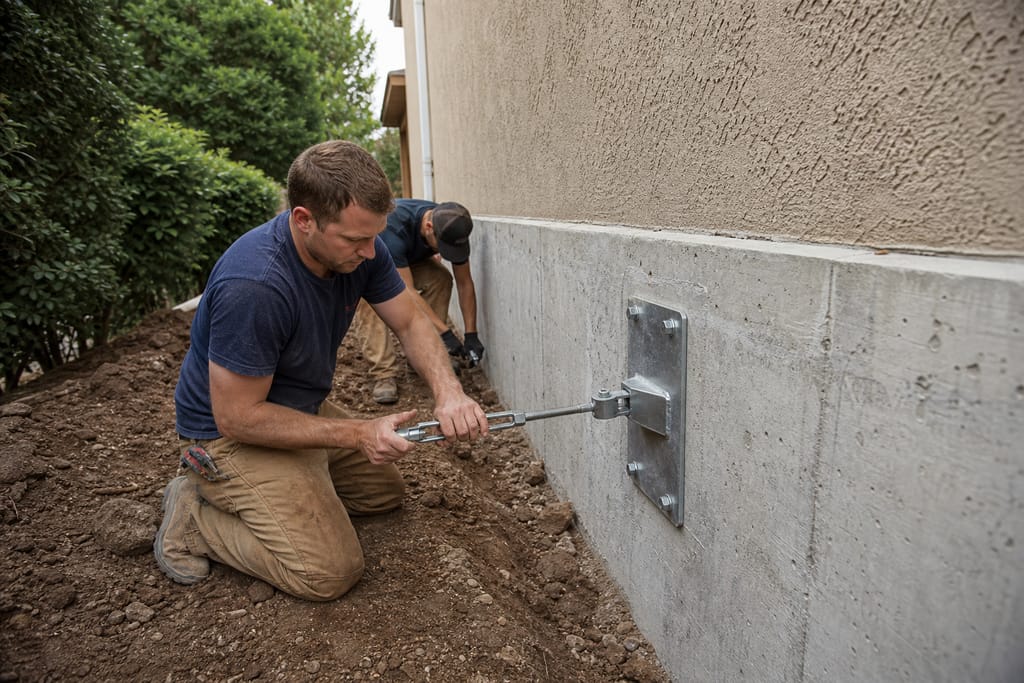
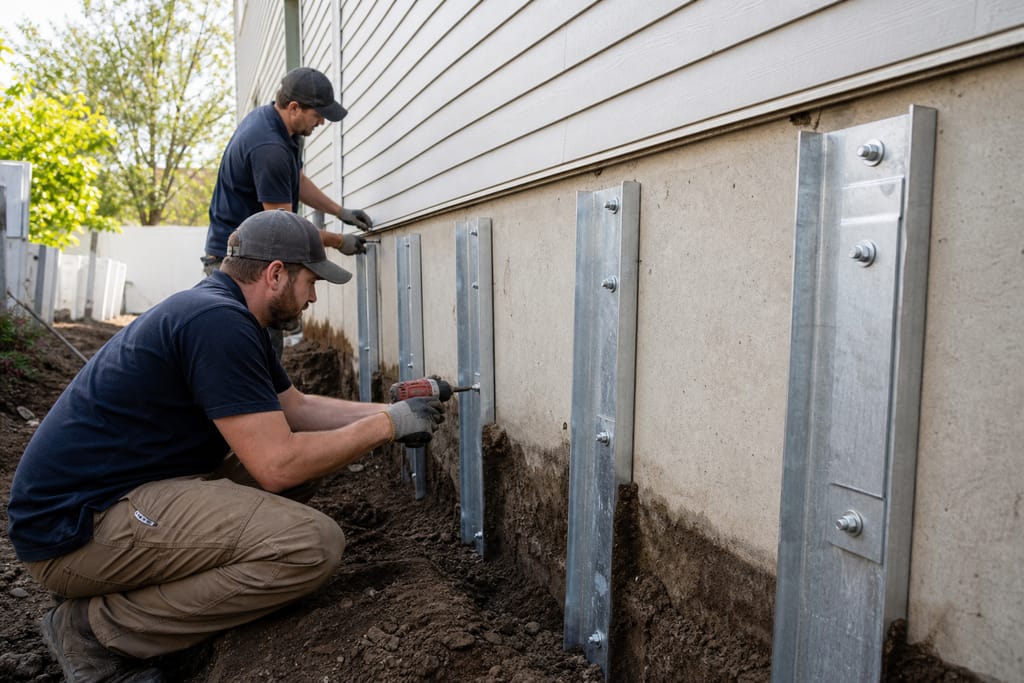
Wall Anchors
Installed in the yard to counteract inward wall pressure, a solid fix when there's room to set anchor plates outside the foundation line.
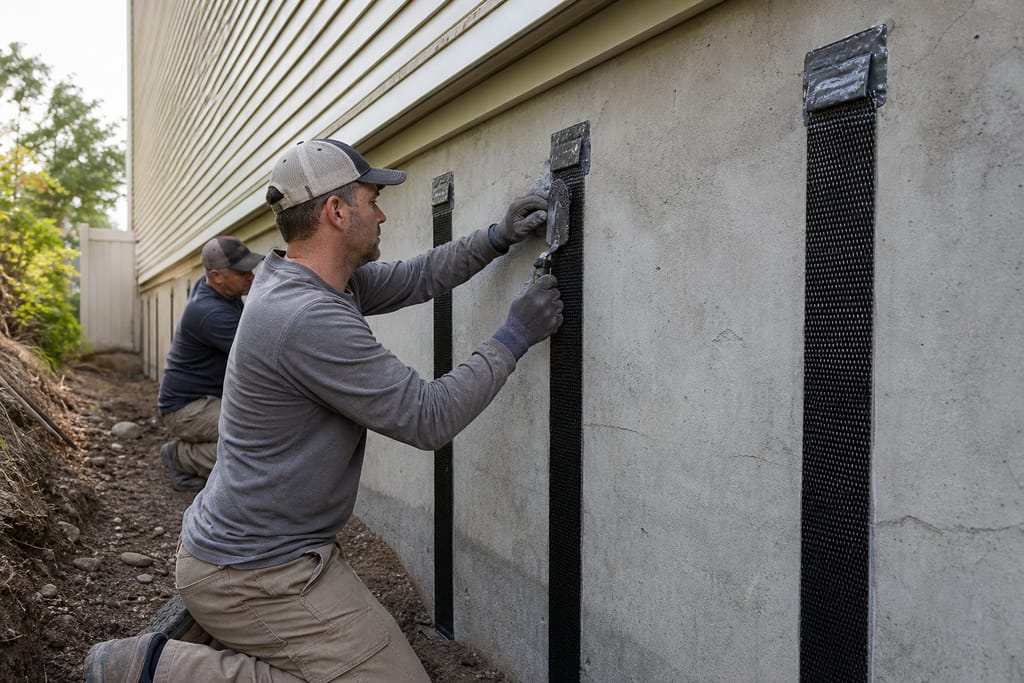
Carbon Fiber Straps
Reinforce walls without requiring extensive excavation, useful on tighter Lindon lots where yard access is limited.
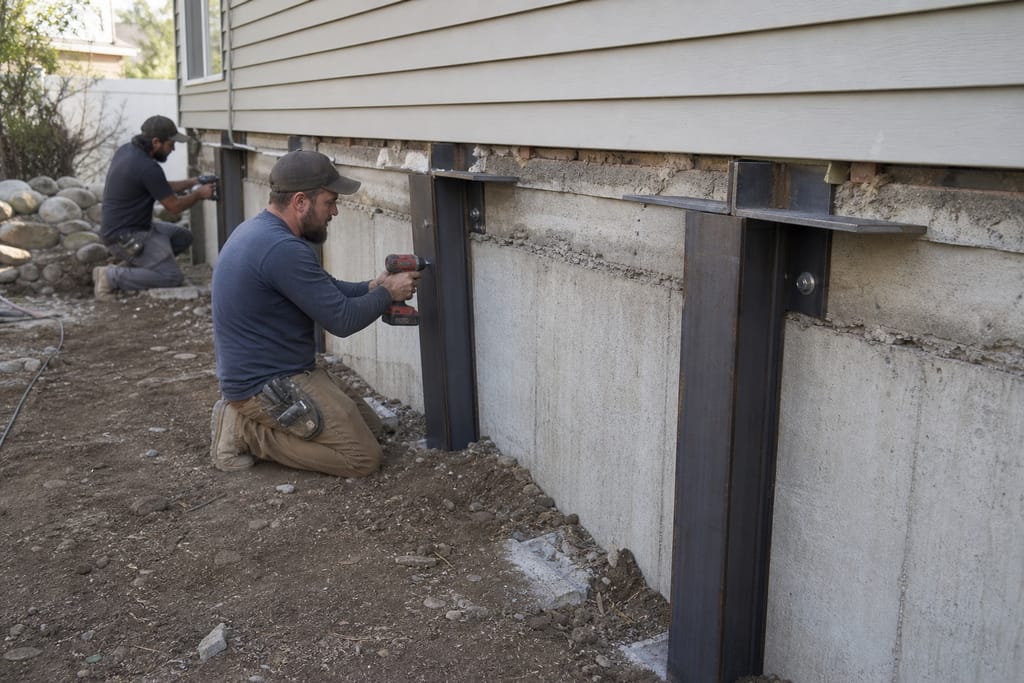
Steel I-Beams
Provide rigid bracing against lateral wall movement on walls with more advanced bowing.
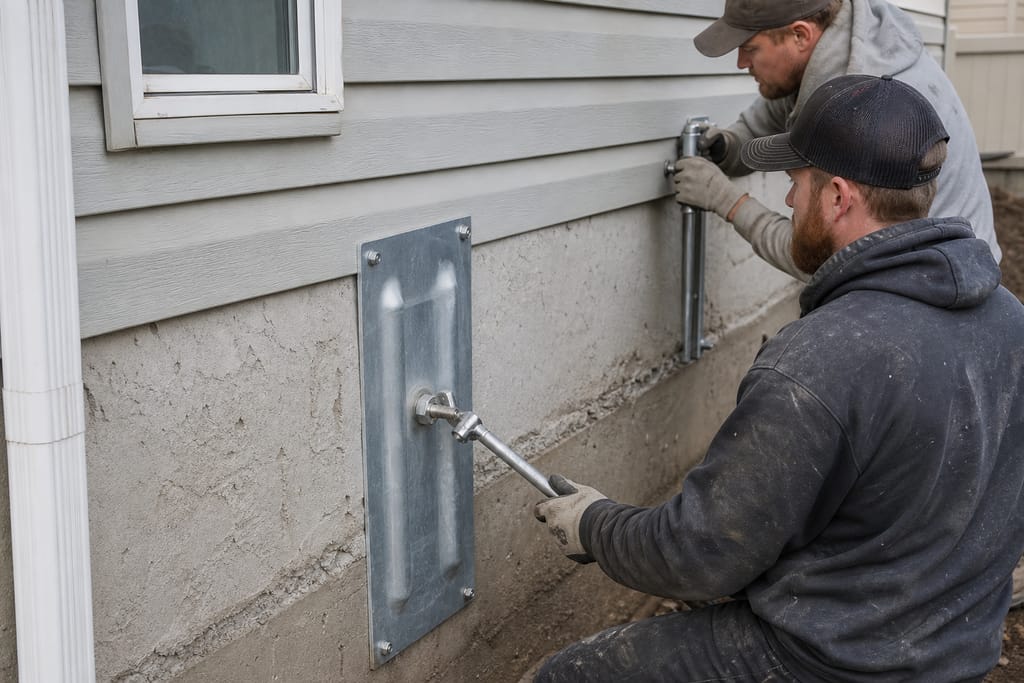
Wall Plates
Distribute anchor tension evenly across the wall surface so pressure doesn't concentrate at one point.
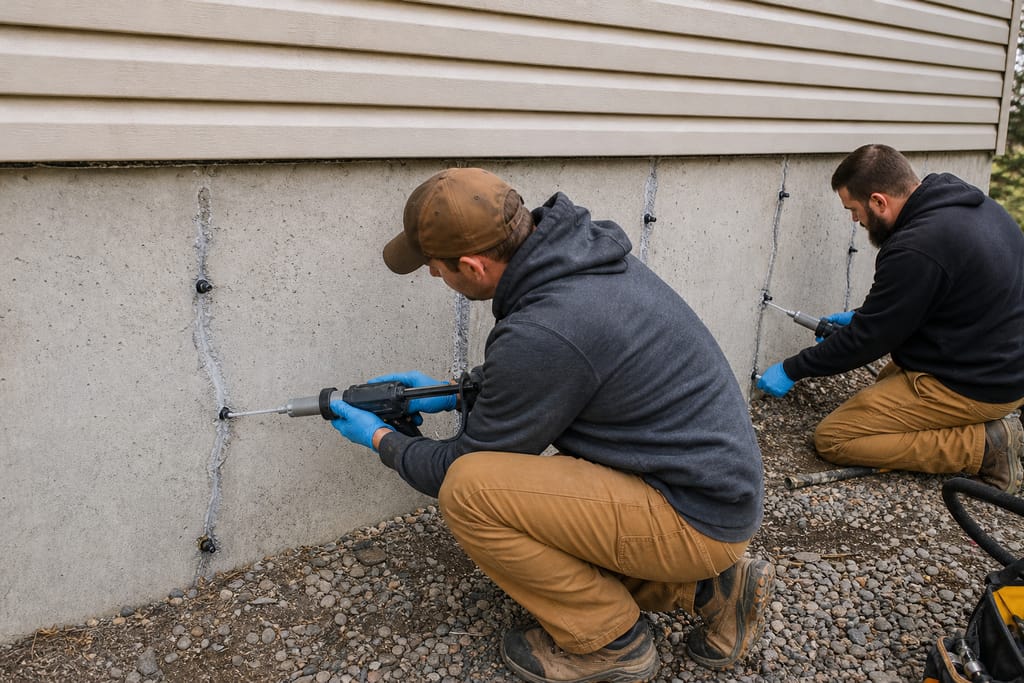
Epoxy Crack Filler
Seals cracks before reinforcement materials are applied, important before any strap or anchor goes on.
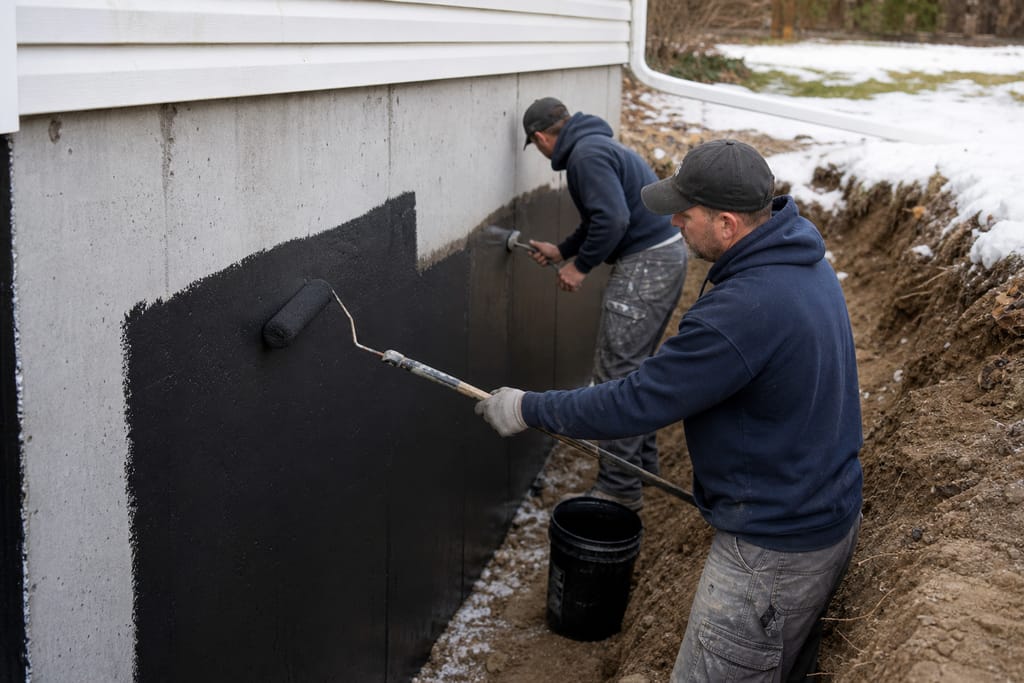
Moisture Barrier Coating
Helps protect reinforced walls from future water damage tied to spring snowmelt.
Questions on materials?
Get a Free EstimateTimeline
How Long Does a Wall Stabilization Take?
Most wall stabilization jobs are contained to a single basement wall and don't stretch into a multi-week project.
- 01
Inspection and assessment
same day - 02
Reinforcement plan finalized
within a day or two
- 03
Anchor or strap installation
1 dayfor a typical wall
- 04
Tensioning and final check
same day - 05
Drainage correction if needed
1–2 daysadditional
Need a schedule that fits?
Get a Free EstimateWhen to call
When to Call for Wall Stabilization
Call if you see a wall bowing inward, horizontal cracking across a basement wall, or water pooling against that wall after snowmelt. These signs mean pressure is actively working against the wall, not just cosmetic settling. Get a free estimate before the bow progresses further.
Seeing warning signs?
Get a Free EstimateBefore & after
Before and After Wall Stabilization Results
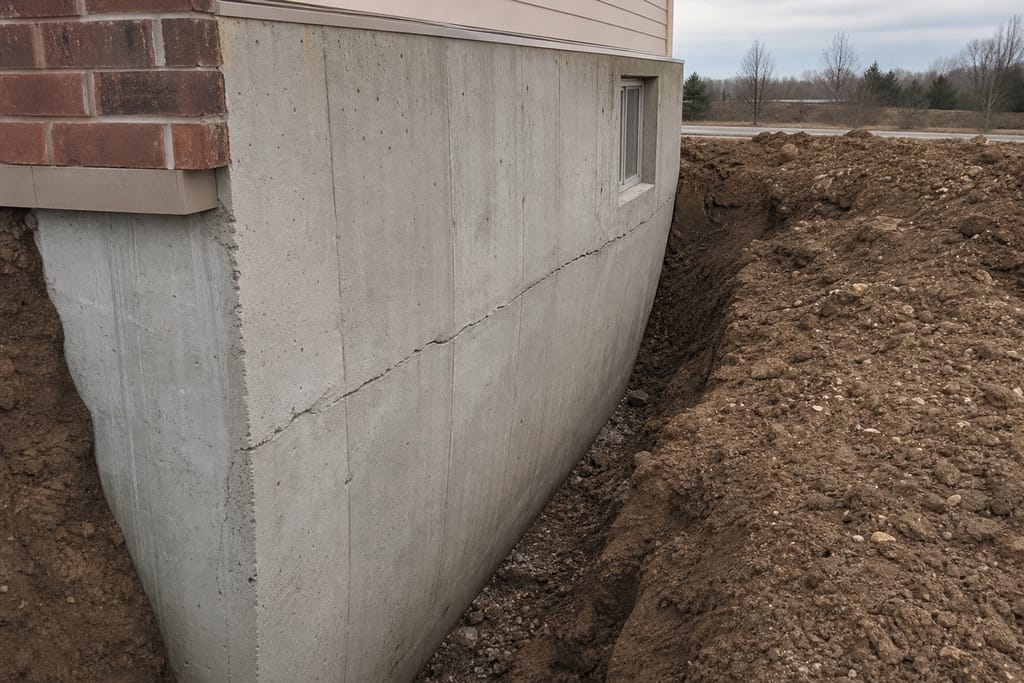
Before 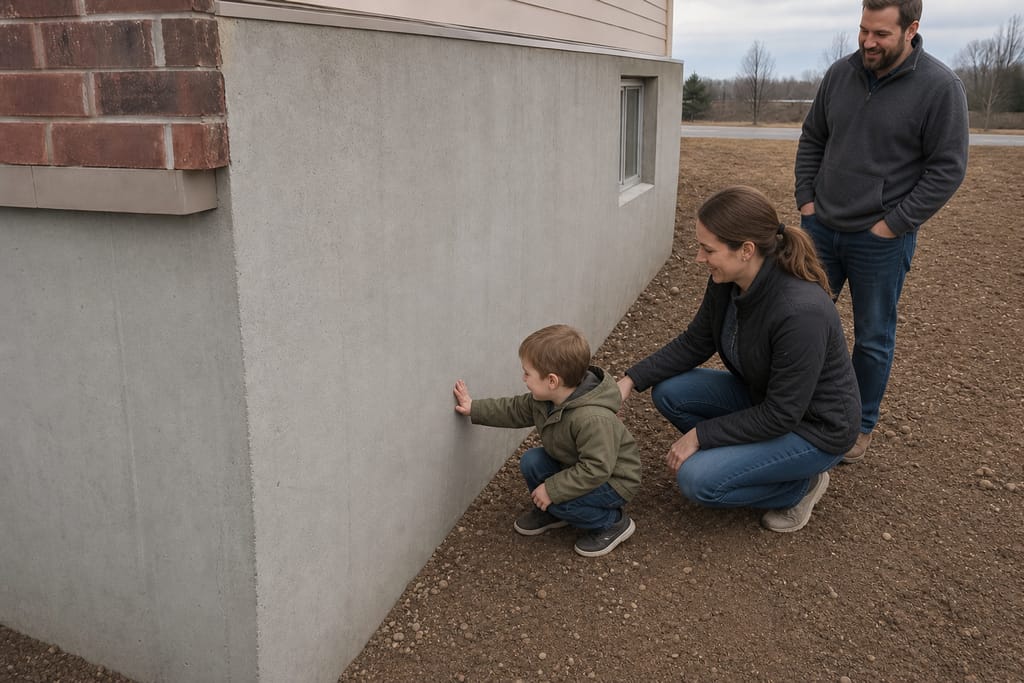
After
FAQs
Wall Stabilization FAQs
How much does wall stabilization cost in Lindon?
Cost depends on wall length, how far it's bowed, and whether anchors or carbon fiber fits better. A site visit gives the real number.
How long does wall stabilization take?
A single wall with anchors or straps usually wraps up in a day. Add drainage correction and plan on a day or two more.
Do I need a permit for wall anchors?
Structural wall anchor systems tied to load generally need a permit through Utah County. Minor crack reinforcement without anchors usually doesn't.
Is DIY wall bracing a good idea?
No. Bracing a bowing wall without fixing the pressure source behind it just delays failure. Anchors and straps need correct spacing and tension that's hard to judge without experience.
When should I call about a bowing wall?
Call as soon as you notice visible bowing, a horizontal crack, or water against the wall after rain or snowmelt. Waiting lets the pressure keep working on the wall.
What affects wall stabilization pricing?
Wall length, severity of the bow, and whether yard space allows for exterior anchors versus interior-only carbon fiber.
What's typically included in a wall stabilization job?
Inspection, pressure assessment, reinforcement installation, and a final stability check. Drainage work is usually quoted separately.
How do I prepare for a wall stabilization visit?
Clear storage away from the affected wall and have photos ready showing how the crack or bow has changed over time if you've been tracking it.
Next step
Get a Wall Stabilization Estimate in Lindon
Call (435) 325-2652 or request a free estimate and we'll check the wall and the pressure behind it before recommending anything.
More services
Other Foundation Repair services
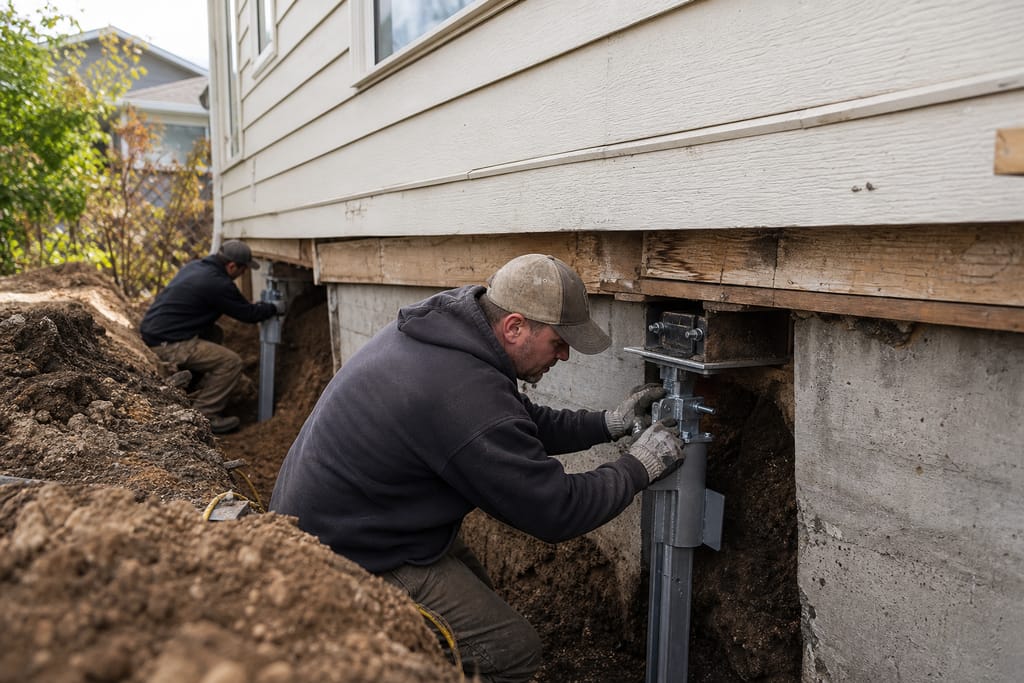
Foundation Repair
Foundation repair in Lindon using piering, crack injection, and wall stabilization matched to Utah County soil. Free estimates, no pressure.
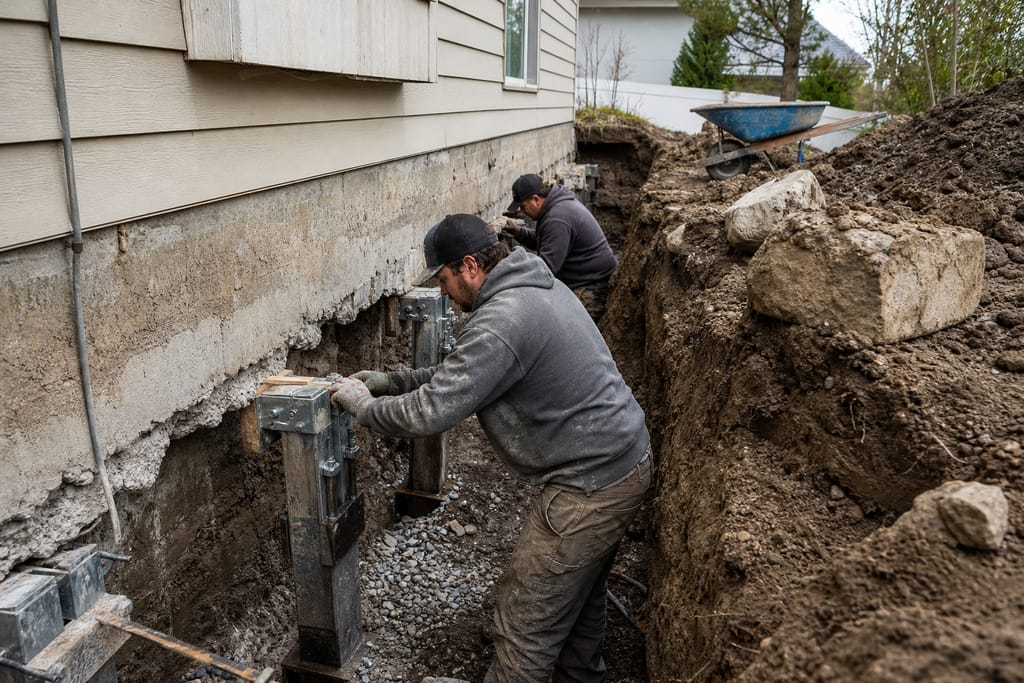
Piering and Underpinning
Piering and underpinning in Lindon stops foundation settlement with steel or helical piers driven to stable soil. Free estimates.
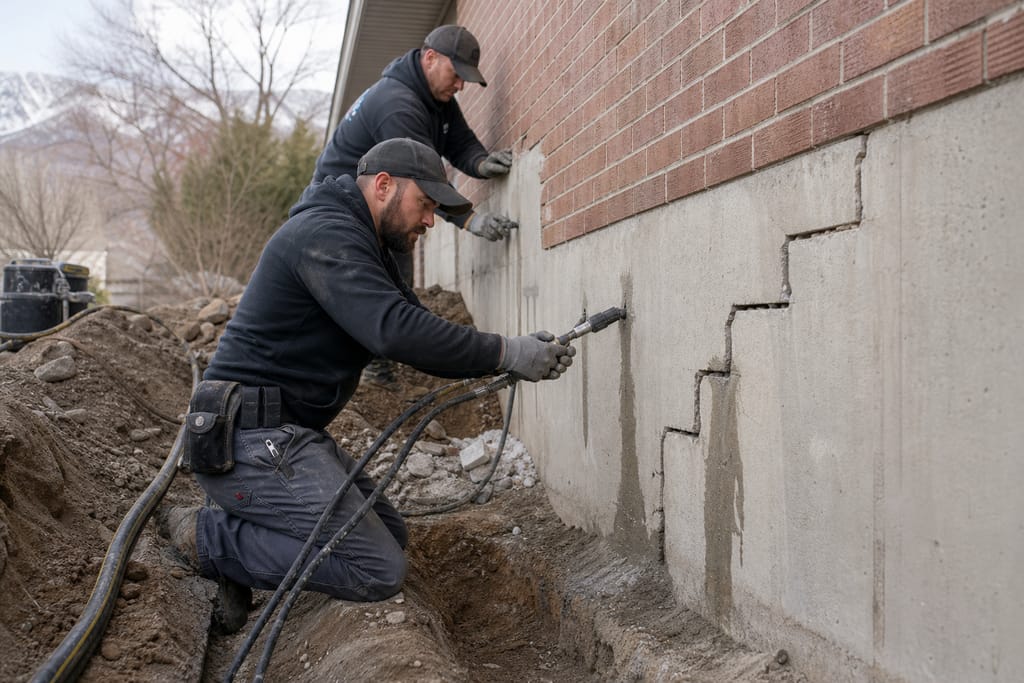
Foundation Crack Repair
Foundation crack repair in Lindon seals cracks with epoxy or polyurethane injection, not surface caulk. Free estimates available.
Ask about Wall Stabilization
Tell us about the project and how to reach you.